

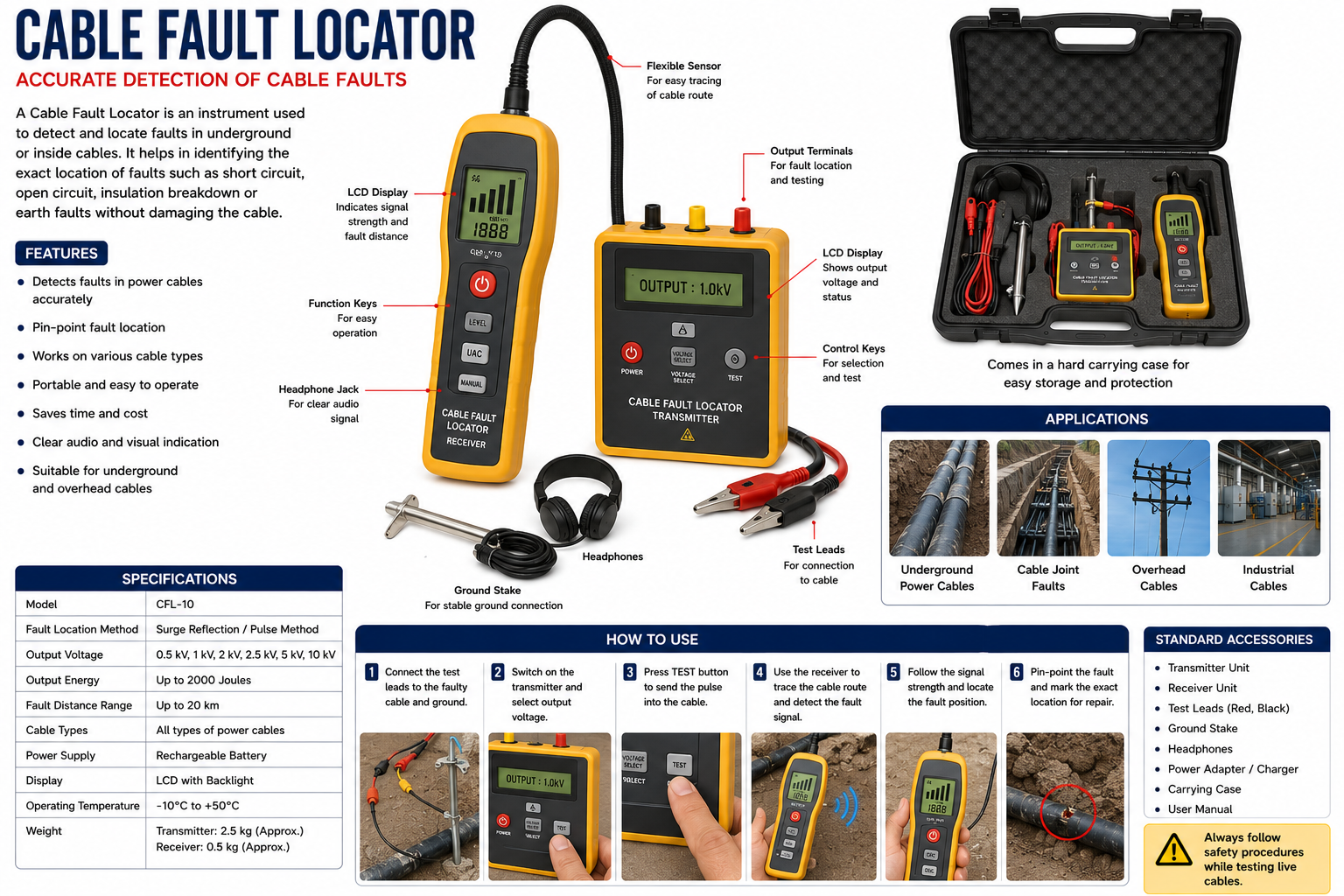
Cable Fault Locator
Description
A Cable Fault Locator is a testing instrument used to detect and locate faults in electrical cables, such as breaks, short circuits, or insulation failures. It uses electrical signals or time-domain reflectometry (TDR) techniques to identify the exact position of the fault. This tool is widely used in electrical maintenance and troubleshooting work.
Uses
- Locating faults in underground and overhead cables.
- Detecting open circuits and short circuits.
- Identifying insulation failures.
- Reducing troubleshooting time in electrical systems.
- Used in maintenance and repair work.
Parts of Cable Fault Locator
- Display Unit: Shows fault location and readings.
- Signal Generator: Sends test signals into the cable.
- Receiver: Detects returned signals.
- Control Panel: Used to operate the device.
- Test Leads: Connect the instrument to the cable.
Material
- Plastic or metal housing
- Electronic circuits and sensors
- Insulated cables and connectors
- Digital display components
Shape
A Cable Fault Locator typically has a portable box-shaped design with a display screen, control buttons, and connection ports. It is compact and easy to carry for field and workshop use.
Safety Precautions
- Ensure the cable is de-energized before testing.
- Use proper insulated test leads.
- Follow manufacturer instructions.
- Wear safety gloves and protective equipment.
- Handle the device carefully to avoid damage.
Conclusion
The Cable Fault Locator is an essential testing instrument for identifying cable faults quickly and accurately. It improves efficiency and reliability in electrical maintenance and troubleshooting work.